At CMI, we use a practical engineering approach based on flow velocity, pressure drop, contaminant loading, and process conditions to identify the optimal sizing range for each project.
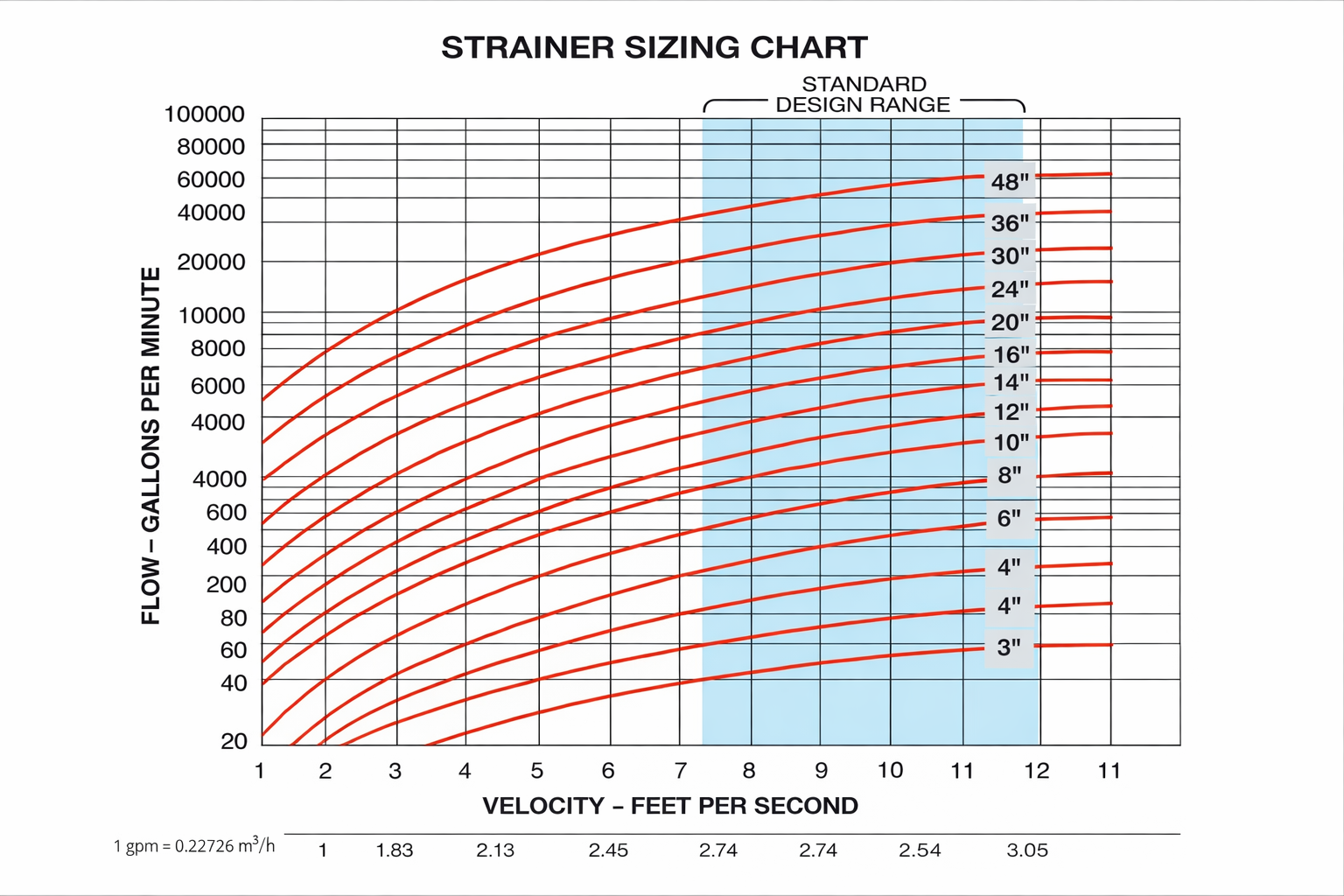
Engineering Precision: Finding the Sweet Spot
Proper filter sizing ensures that fluid velocity remains within an efficient operating window while maintaining acceptable clean pressure drop and sufficient solids holding capacity.
- Undersized filters may blind quickly and increase differential pressure.
- Oversized filters may add unnecessary cost and space requirements.
- Correct sizing improves uptime, service interval, and operating efficiency.
1. Correlation: Diameter, Velocity & Flow Rate
For water-based systems, typical design velocity is often maintained between 1.0 m/s and 2.5 m/s, depending on service conditions, line size, solids loading, and allowable pressure loss.
Lower velocity can reduce erosion and pressure drop, while higher velocity may be acceptable in compact systems with clean fluids.
Quick Reference Examples at 1.0 m/s
| Pipe Size (DN) | Approx. Flow Capacity (m³/h) |
|---|---|
| 50 | 7.1 |
| 80 | 18.1 |
| 100 | 28.3 |
| 150 | 63.6 |
| 200 | 113.1 |
| 300 | 254.5 |
| 400 | 452.4 |
| 600 | 1017.9 |
For higher velocity systems, total flow capacity increases proportionally. For example, DN100 at 2.0 m/s can carry approximately double the flow compared with 1.0 m/s service.
2. Critical Selection Criteria
Fluid Characteristics
Viscosity, density, temperature, and chemical aggressiveness determine body material selection such as carbon steel, 304, 316L, titanium, or Hastelloy.
Contaminant Type
Fibrous solids, abrasive particles, gels, sticky fouling, or fine powders may require different internal designs or media technologies.
Design Pressure & Temperature
Operating conditions affect wall thickness, flange rating, closure type, and compliance route such as PED or ASME requirements.
Allowable Clean Pressure Drop
For many industrial liquid systems, CMI typically targets an initial clean differential pressure below approximately 0.1 – 0.2 bar, helping extend cleaning intervals.
3. CMI Selection Tool: From Data to Solution
When customers provide operating data, CMI uses pressure drop curves and practical design rules to recommend the most suitable configuration.
- Ideal Housing Size: Sized to maintain suitable velocity and serviceability.
- Element Surface Area: Determined according to solids loading and cleaning interval target.
- Material Selection: Based on corrosion, pressure, and process compatibility.
- Maintenance Strategy: Manual clean, quick-open, duplex, or automatic self-cleaning options.
Why Proper Sizing Matters
Correct sizing reduces downtime, protects downstream equipment, minimizes pressure loss, and lowers total lifecycle cost. At CMI, filter sizing is based on process performance—not guesswork.
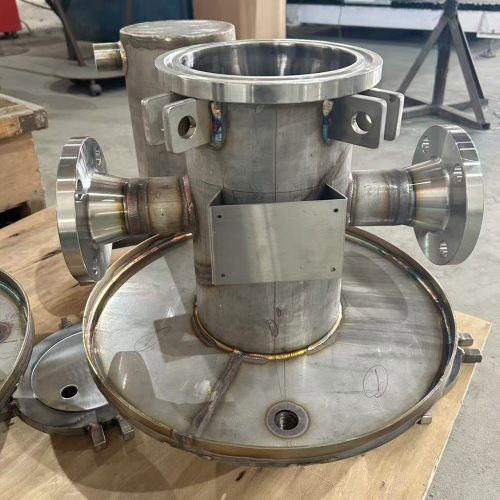
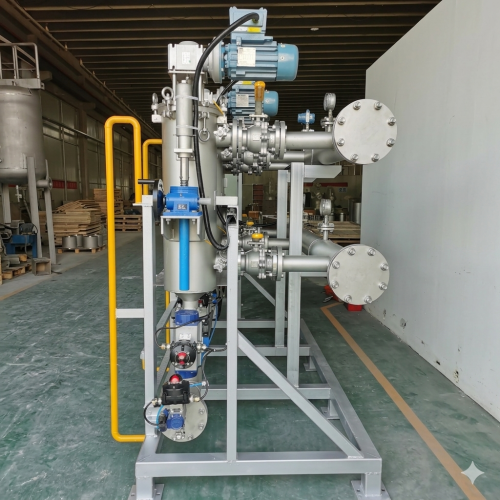
Relevant Cases
Get a Quote
Our fabrication experts are ready to help you with custom-made filter housing and fabricated metal filter vessel solutions. Contact us with your specific requirements for a customized quote.
Products Overview
Explore our comprehensive range of industrial filtration products
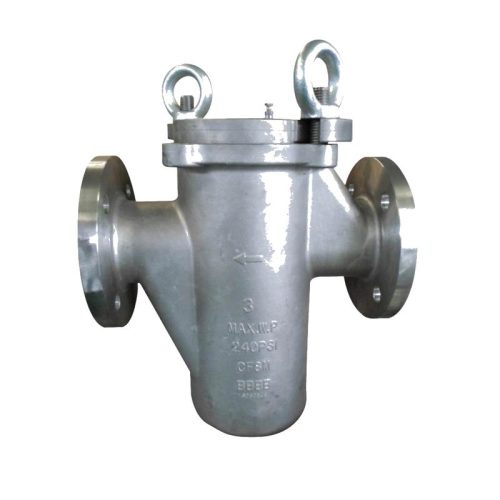
Basket Strainer
Product Overview CMI Basket Strainers are designed for reliable removal…
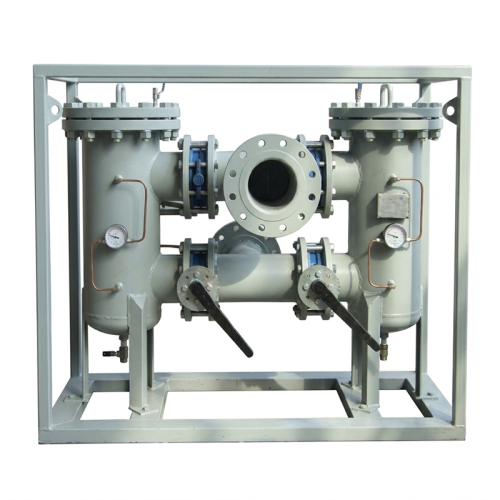
Duplex Strainer
Product Overview The CMI DSTC Series Duplex Strainer is a…
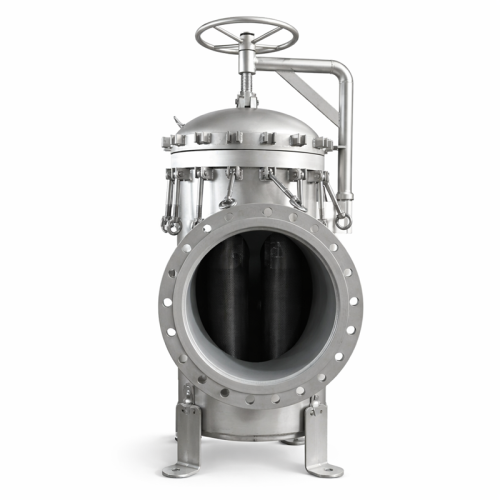
Industrial Basket Filter
Product Overview CMI Industrial Basket Filter Housings are heavy-duty filtration…
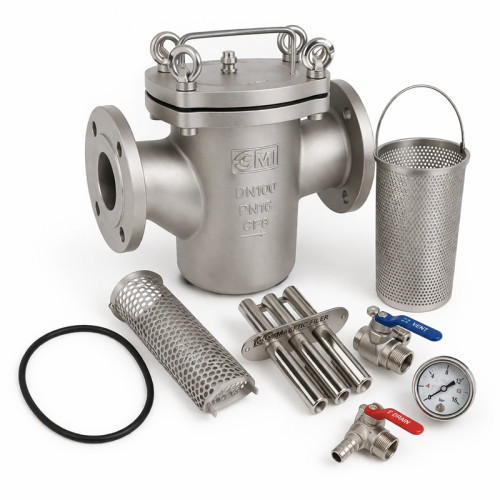
Filter Accessories
Product Overview CMI Filter Accessories are designed to support the…