The other route is based on cold isostatic pressing (CIP), where metal powder is compacted under uniform pressure before high-temperature sintering. This process is widely used for precision porous components that require stable pore structure, strong mechanical integrity, and reliable long-term filtration performance.
For industrial users, the difference between these two manufacturing routes is not just about production technique. It directly affects pore uniformity, wall structure, pressure resistance, filtration stability, and the overall service behavior of the filter element.
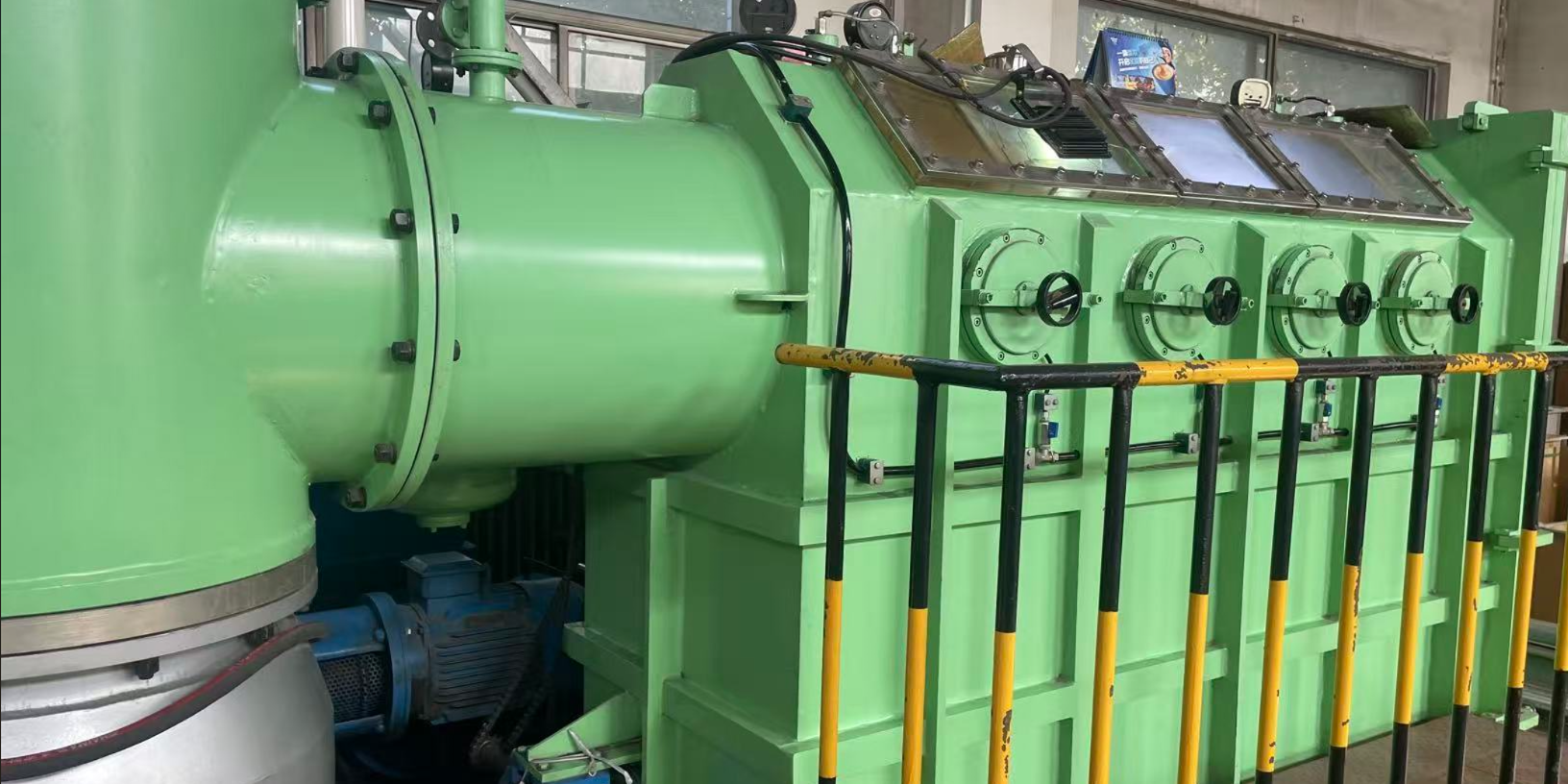
Two Main Manufacturing Routes
Rolled Porous Sheet Process
In this process, porous metal sheet is first produced, then rolled into a tubular shape and welded to form the final filter element. This manufacturing route is commonly associated with thin-wall construction and relatively high permeability.
Advantages:
- Thin wall structure can help achieve higher flow rate
- Lower wall resistance in some applications
- Suitable for certain gas and liquid filtration duties where high throughput is required
Considerations:
- Pore distribution may be less uniform across the full structure
- Welded seam and sheet-forming process may introduce local variation
- Structural consistency may be less ideal for applications requiring highly stable and repeatable pore control
Cold Isostatic Pressing (CIP) Process
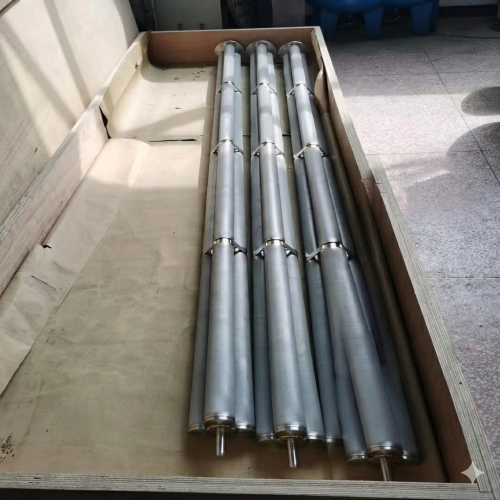
In the CIP process, metal powder is filled into a mold and compacted under uniform pressure from all directions before sintering. After compaction, the green body is sintered at high temperature so that the powder particles bond metallurgically while preserving a controlled porous network.
This is the process route used by CMI for many porous metal filter elements and precision porous components.
Key advantages of the CIP process include:
Fixed Pore Structure
During sintering, metal particles are bonded at the molecular level into a permanent porous matrix. The pore structure does not shift during normal operation, which means filtration accuracy remains stable even under pressure fluctuation or repeated cycling.
No Media Migration
Unlike fibrous or loosely bonded media, sintered porous metal does not release fibers or media fragments into the downstream process. This is especially important in semiconductor, pharmaceutical, fine chemical, and other critical purity applications.
High Porosity with Mechanical Strength
The CIP route allows a well-balanced combination of porosity and structural strength. Porosity in the range of approximately 30% to 40% can be achieved while maintaining good mechanical integrity, enabling low pressure drop together with high flow capacity.
No Welding Seam
CIP-manufactured filter elements can be formed as an integral porous body without a longitudinal welding seam. This helps improve structural continuity, reduce potential weak points, and enhance reliability in pressure cycling and repeated cleaning service.
Better Structural Uniformity
Because the powder is compacted under uniform isostatic pressure, the final wall structure is generally more homogeneous than rolled-sheet construction. This helps improve repeatability in pore distribution, permeability, and overall product consistency.
Stronger Suitability for Demanding Service
CIP-manufactured porous filters are well suited for applications involving backwashing, pressure fluctuation, pulsation, or repeated cleaning cycles, where dimensional stability and pore consistency are critical.
Typical Comparison Points
- Wall Thickness: Rolled sheet construction can achieve thinner walls.
- Flow Capacity: Rolled sheet designs may offer higher initial flow in certain thin-wall applications.
- Pore Uniformity: CIP generally provides better structural consistency and more stable pore distribution.
- Mechanical Integrity: CIP is better suited for pressure cycling, backwashing, and repeated cleaning.
- Purity-Critical Service: CIP is preferred where no media shedding and stable structure are required.
- Welding Seam: CIP elements can be produced without a longitudinal seam, improving structural continuity.
Why Process Selection Matters
The manufacturing route of a sintered filter element has a direct impact on performance. For customers, choosing the right process is not only a matter of initial flow rate, but also a matter of long-term filtration stability, contamination control, cleanability, and service life.
At CMI, we focus on cold isostatic pressing technology because it provides a more controlled pore network, stronger structural consistency, and better reliability in demanding industrial processes.
Relevant Cases
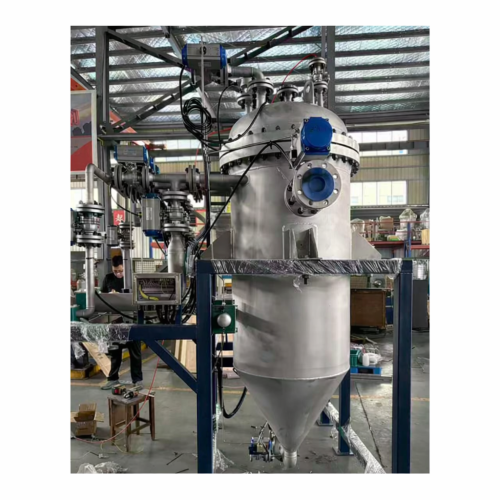
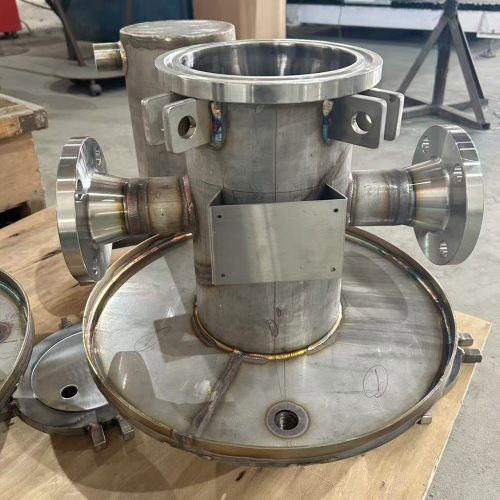
Get a Quote
Our fabrication experts are ready to help you with custom-made filter housing and fabricated metal filter vessel solutions. Contact us with your specific requirements for a customized quote.
Products Overview
Explore our comprehensive range of industrial filtration products
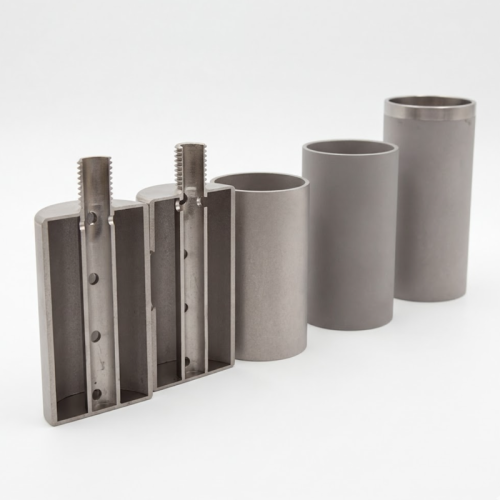
Asymmetric Sintered Metal Filter
Graded Porous Structure for High Efficiency and Extended Service Life…
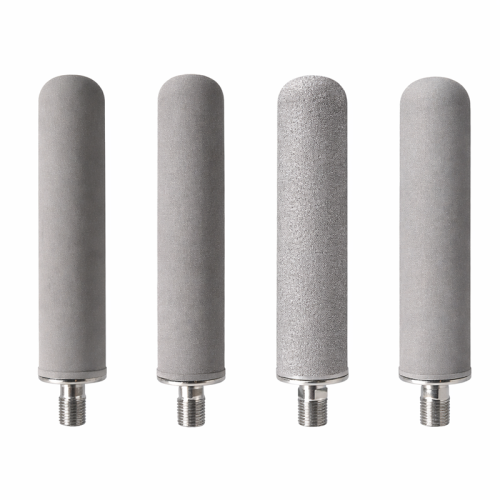
Sintered Metal Powder Filter
High-Performance Filtration for Demanding Industrial Applications CMI sintered metal powder…
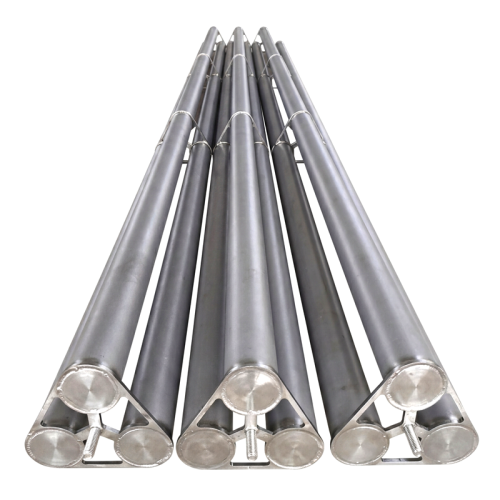
Multi-Tube Sintered Metal Filter Assembly
High-Flow Sintered Filter Module for High-Temperature Industrial Filtration CMI multi-tube…
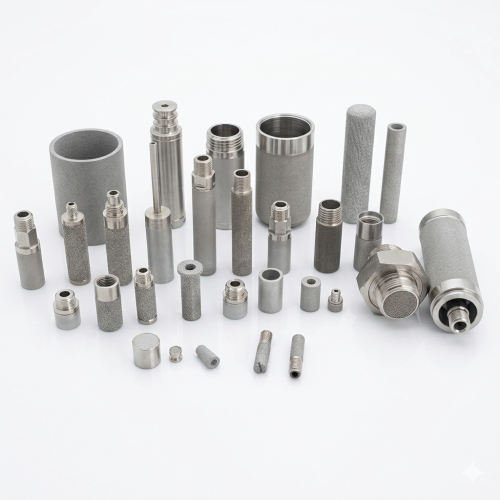
Porous Metal Components
Porous Metal Components Precision Sintered Metal Parts for Filtration, Flow…