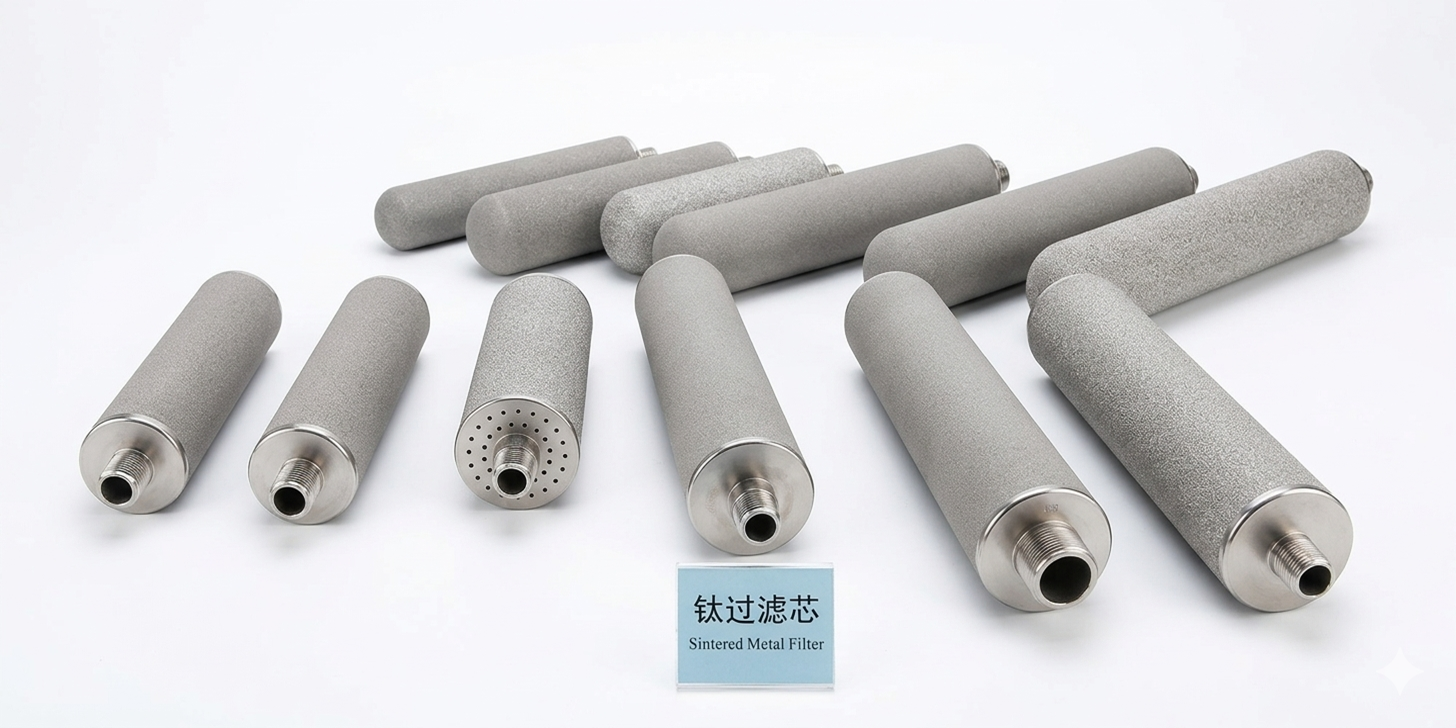
In CMI titanium filters, porosity is formed by a labyrinth of interconnected microscopic channels that allow fluid or gas to pass while trapping contaminants throughout the filter wall.
Unlike surface filters that load particles only on the exterior, sintered titanium media provides a true three-dimensional depth-loading structure. This enables higher dirt holding capacity, more stable pressure drop behavior, and longer service cycles.
Depending on filtration grade and application requirements, CMI titanium filters typically maintain porosity levels between approximately 35% and 45%.
Technical Data Table
| Material | Micron Rating | Porosity |
|---|---|---|
| Titanium | 100 μm | 41.96% |
| Titanium | 50 μm | 37.90% |
| Titanium | 20 μm | 37.46% |
| Titanium | 10 μm | 34.28% |
| Titanium | 5 μm | 41.98% |
| Titanium | 3 μm | 40.74% |
| Titanium | 2 μm | 38.37% |
| Titanium | 1 μm | 42.28% |
| Titanium | 0.5 μm | 36.22% |
Why These Numbers Matter
One notable result in the data is that ultra-fine grades such as 0.5 μm still maintain 36.22% porosity, while coarse grades such as 100 μm reach 41.96%.
This difference is relatively small and demonstrates strong process capability. Many lower-grade porous manufacturers experience dramatic porosity loss when micron rating becomes finer, sometimes dropping below 20%, which can lead to rapid pressure rise, short service cycles, difficult cleaning, and reduced flow performance.
CMI maintains high porosity even at fine micron ratings through precise control of powder morphology, particle distribution, compaction density, and sintering temperature. This means customers do not need to sacrifice flow performance in order to achieve fine filtration precision.
Impact on Filtration Performance
Permeability & Pressure Drop
Higher porosity creates more interconnected flow paths for the fluid. This generally results in lower initial pressure drop, higher flow efficiency, and reduced pumping energy consumption.
For continuous industrial processes, lower differential pressure can significantly reduce operating cost.
Dirt Holding Capacity
Porosity directly determines how much contaminant volume the filter can hold before cleaning becomes necessary. High internal void volume enables longer filtration cycles, reduced shutdown frequency, better depth-loading performance, and lower replacement or cleaning cost.
Structural Integrity
Very high porosity alone is not enough. It must be balanced with mechanical strength.
CMI’s sintering process creates metallurgical bonding between titanium particles, allowing even high-porosity structures to withstand reverse pulse cleaning, pressure cycling, frequent backwashing, and continuous industrial duty.
The CMI Advantage
We do not simply produce a micron rating. We engineer the internal porous architecture.
By precisely controlling powder spherical shape, compaction uniformity, and sintering temperature, CMI maintains a consistent porosity range of approximately 35% to 43% across our titanium product range — from 0.5 μm to 100 μm.
This ensures customers achieve both fine filtration precision and stable flow performance without unnecessary sacrifice in service life or cleanability.
Relevant Cases
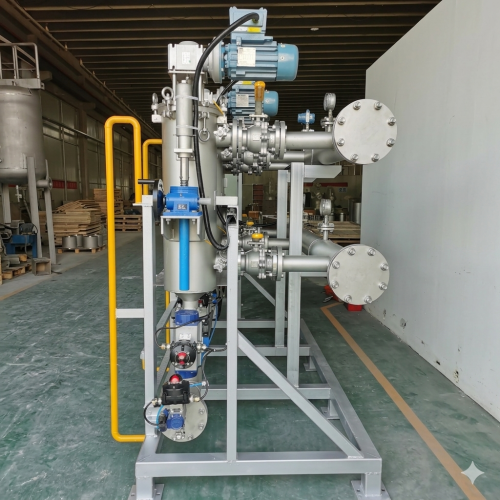
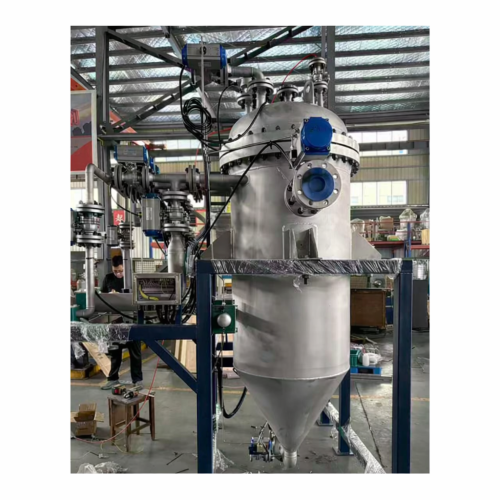
Get a Quote
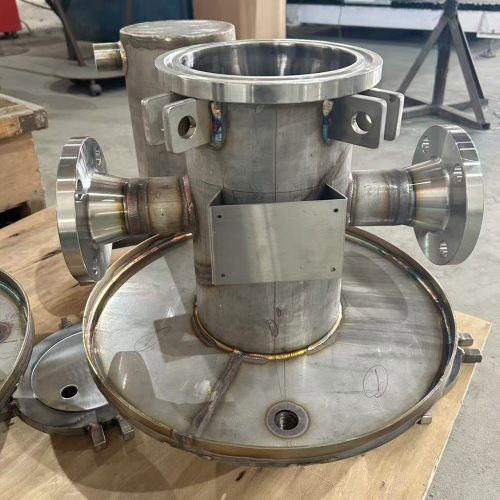
Our fabrication experts are ready to help you with custom-made filter housing and fabricated metal filter vessel solutions. Contact us with your specific requirements for a customized quote.
Products Overview
Explore our comprehensive range of industrial filtration products
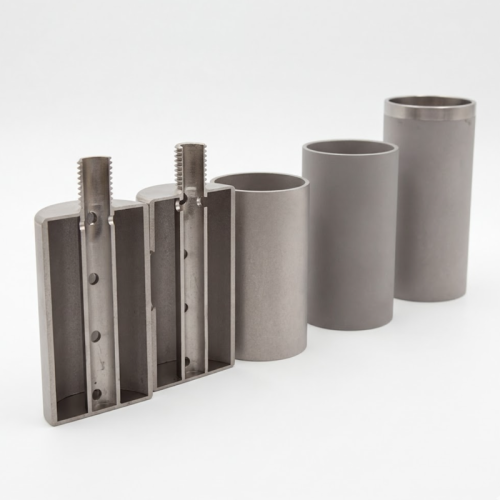
Asymmetric Sintered Metal Filter
Graded Porous Structure for High Efficiency and Extended Service Life…
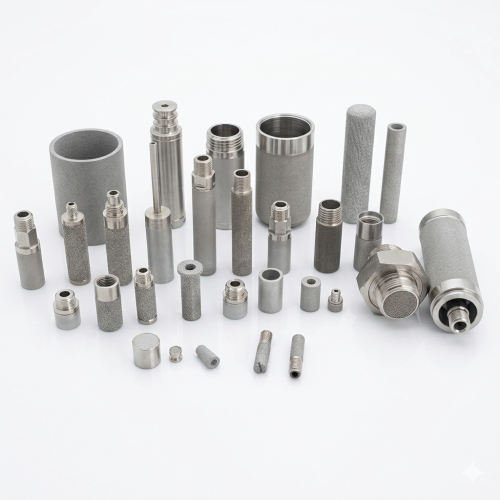
Porous Metal Components
Porous Metal Components Precision Sintered Metal Parts for Filtration, Flow…
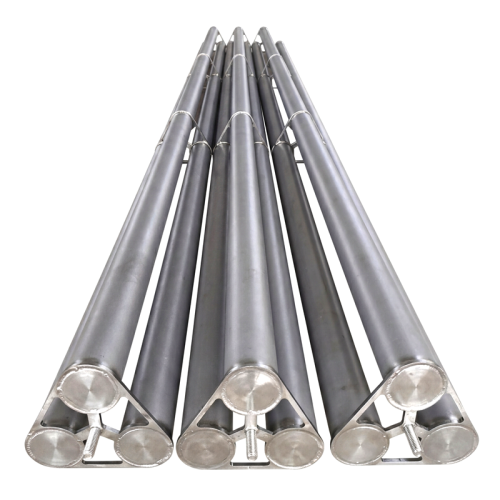
Multi-Tube Sintered Metal Filter Assembly
High-Flow Sintered Filter Module for High-Temperature Industrial Filtration CMI multi-tube…
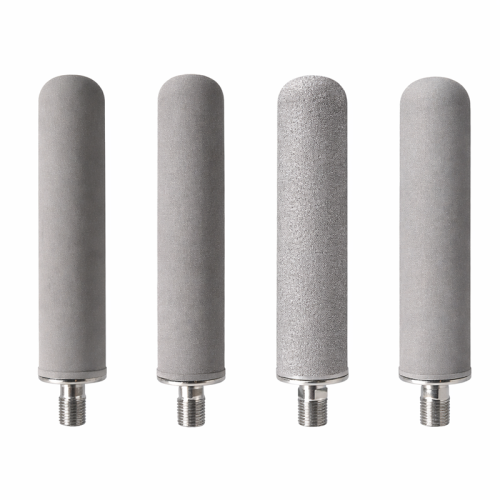
Sintered Metal Powder Filter
High-Performance Filtration for Demanding Industrial Applications CMI sintered metal powder…