
In sintered powder media, the microscopic pore network forms a three-dimensional labyrinth. This internal geometry governs how particles are captured, how pressure drop develops, how backwashing performs, and how stable the filter remains over long-term service.
At CMI, micro-geometry control is achieved through careful powder selection, cold isostatic pressing, precise temperature control during sintering, and optional surface modification technologies tailored to specific applications.
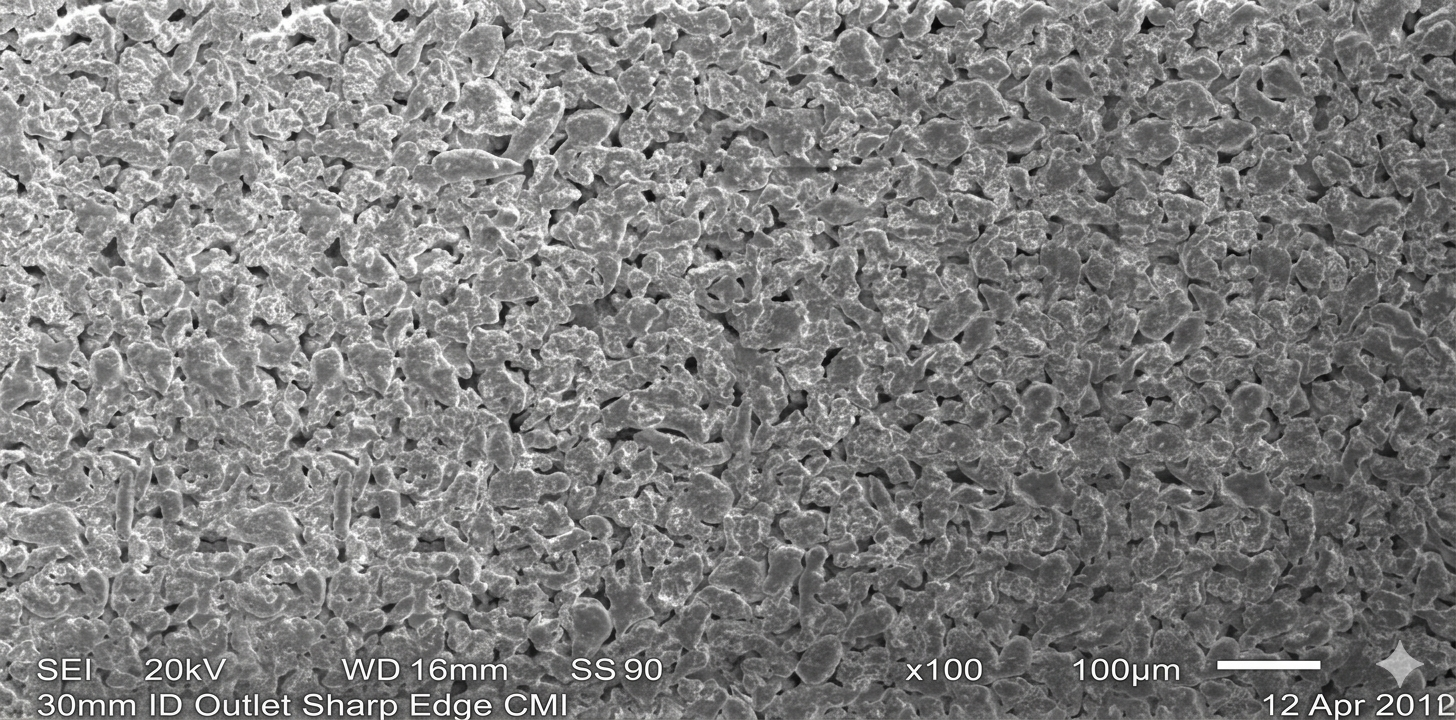
Tortuous Path Separation
One of the most important filtration mechanisms in sintered powder media is tortuous path separation. Rather than acting like a simple screen with straight openings, a powder sintered filter contains a highly interconnected pore network that forces fluid to travel through a maze-like path.
As the fluid passes through this complex internal structure, particles are intercepted, slowed, or trapped at different depths inside the porous wall. This is why sintered powder media can achieve not only surface retention of larger particles, but also effective depth filtration of finer contaminants.
Under scanning electron microscopy, this porous structure can be clearly observed as an irregular but controlled labyrinth of bonded particles and interconnected voids. This microstructure is the core reason why sintered metal filters provide both strength and filtration efficiency.
Pore Size Distribution
Filtration performance depends not only on nominal pore size, but also on how uniformly pore sizes are distributed throughout the media. A stable and well-controlled pore size distribution allows the filter to capture larger particles near the entrance while retaining finer impurities deeper inside the structure.
At CMI, pore size distribution is controlled through a combination of powder characteristics, cold isostatic pressing, and tightly controlled sintering temperature profiles. This helps create a more homogeneous internal pore network, improving filtration consistency, retention efficiency, and pressure drop predictability.
- Higher retention efficiency
- More stable filtration rating
- Better repeatability from batch to batch
- Improved balance between flow rate and particle capture
Thin Functional Filtration Layer by Surface Coating
For certain applications, it is possible to further optimize the porous structure through surface coating technology. This allows a thinner functional filtration layer to be formed on the base porous support without sacrificing the mechanical strength of the overall element.
Such a design is particularly useful in applications where backwashing performance is important. A thinner active filtration layer can help reduce surface loading, improve cake release, and enhance cleaning efficiency during reverse flow or pulse regeneration.
By combining a strong porous support with a finer surface-controlled layer, the filter element can achieve both improved fine particle retention and better regeneration behavior in backwash service.
Surface Modification
In some operating environments, filtration performance is influenced not only by pore structure, but also by the chemical condition of the surface. For this reason, surface modification can be applied to improve fouling resistance, corrosion behavior, and long-term service stability.
One common treatment is passivation. Passivation helps improve the surface condition of stainless steel and can enhance resistance to contamination buildup, corrosion initiation, and salt spray exposure.
For customers with salt spray resistance requirements, CMI can apply suitable surface treatment processes and then verify performance through salt spray testing and validation. This provides a more controlled and documented approach for applications where surface durability is part of the specification.
Why Micro-Geometry Matters
The true value of a sintered porous filter lies in the interaction between structure and function at microscopic level. Material selection provides the foundation, but it is micro-geometry control that determines how effectively the filter captures particles, withstands pressure fluctuation, responds to backwashing, and maintains long-term process stability.
At CMI, we treat pore structure engineering as a core part of porous media design — not just a result of manufacturing, but a controlled performance parameter.
Relevant Cases
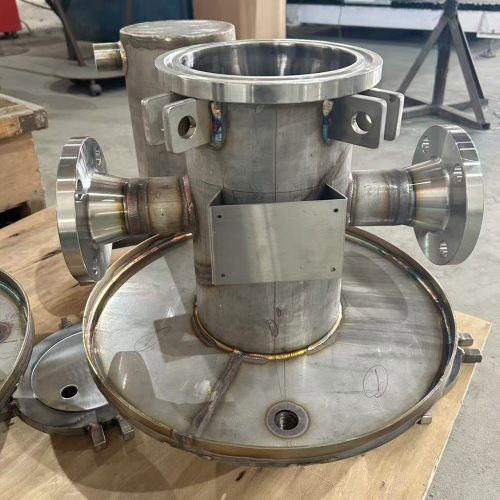
Get a Quote
Our fabrication experts are ready to help you with custom-made filter housing and fabricated metal filter vessel solutions. Contact us with your specific requirements for a customized quote.
Products Overview
Explore our comprehensive range of industrial filtration products
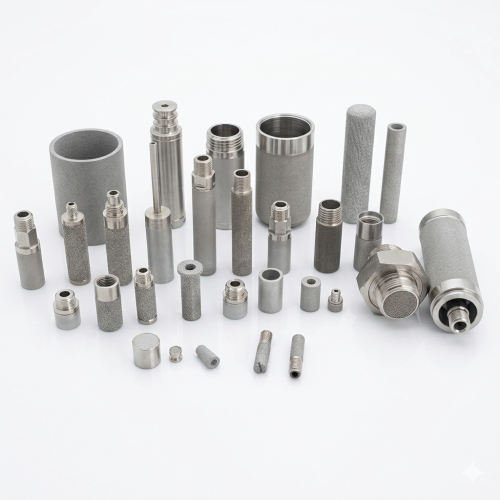
Porous Metal Components
Porous Metal Components Precision Sintered Metal Parts for Filtration, Flow…
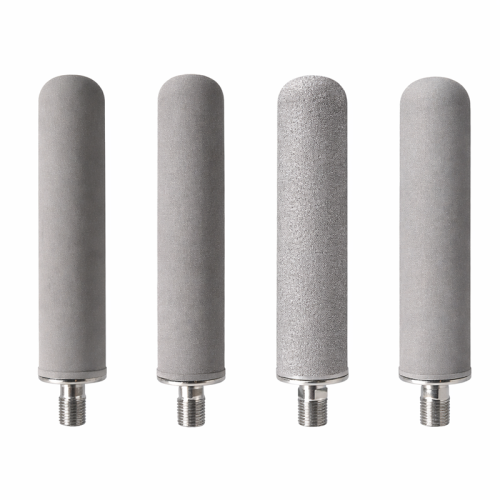
Sintered Metal Powder Filter
High-Performance Filtration for Demanding Industrial Applications CMI sintered metal powder…
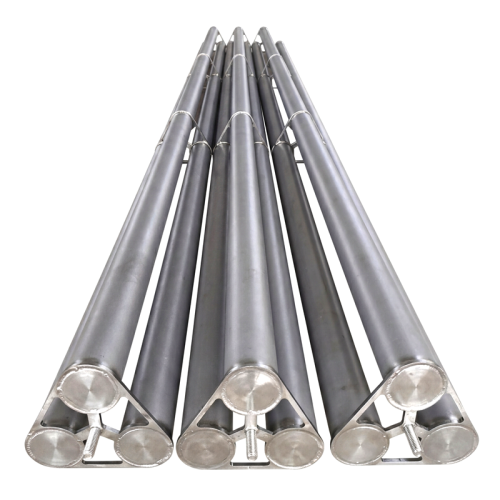
Multi-Tube Sintered Metal Filter Assembly
High-Flow Sintered Filter Module for High-Temperature Industrial Filtration CMI multi-tube…
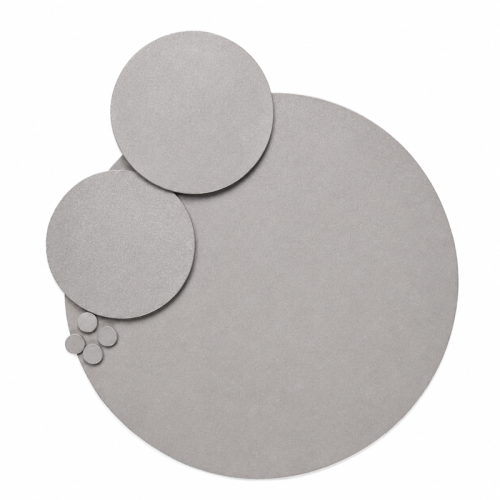
Sintered Metal Powder Discs
Round, Square, and Custom-Shaped Porous Metal Components CMI manufactures sintered…